
Understanding the Different Types of Dental X-Rays
A plain-English look at what dental X-rays show, the main types, and what to expect at your visit.
· Last updated
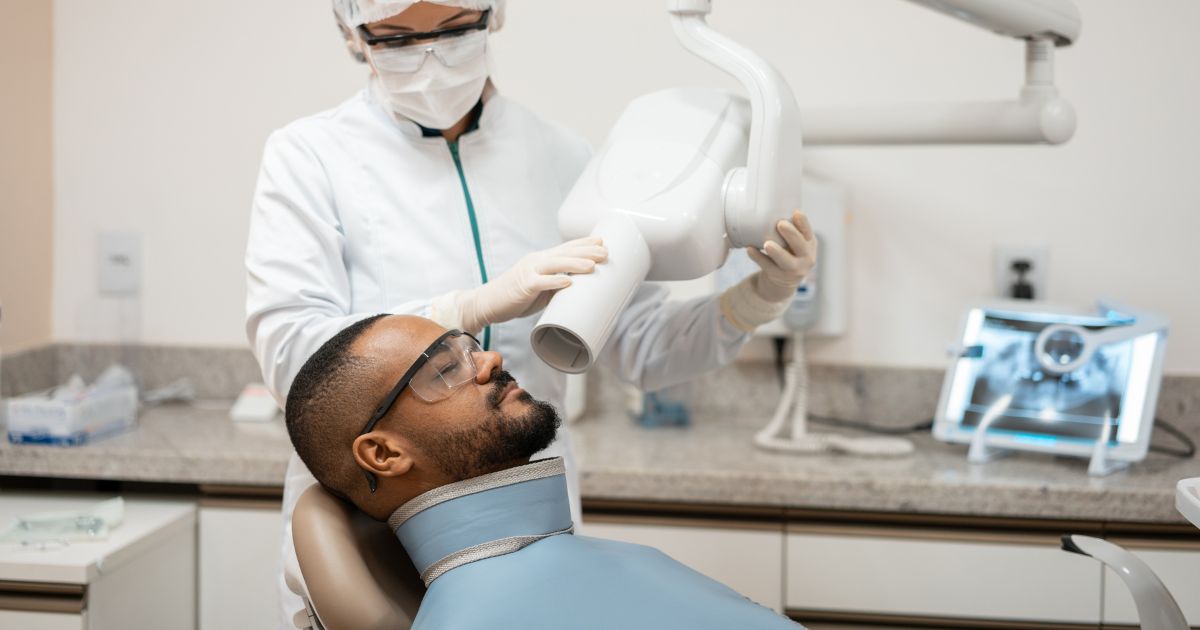
Dental X-rays are one of the quiet workhorses of good dental care. They let your dentist see what a visual exam simply can’t — what’s happening between your teeth, beneath existing fillings, and below the gumline. That extra layer of information is often what makes it possible to catch small issues while they’re still small.
There are several types, each built for a particular job, and all designed to gather useful information using low-exposure imaging. Knowing the basics can take the mystery out of that moment when you’re handed a lead apron and asked to bite down.
Bitewing X-rays
Bitewings are the type most people recognise. You bite gently on a small tab while the image captures the upper and lower back teeth together in a single view. They’re particularly good at revealing decay developing between teeth, where it’s otherwise hidden, and at showing changes in the bone levels that support your teeth.
They’re commonly taken around once a year as part of routine check-ups, though the exact timing depends on your individual needs rather than a fixed schedule. Someone with a history of decay may have them more often; someone with consistently healthy teeth, less so.
Panoramic X-rays
A panoramic scan takes a different approach, sweeping around your head to capture the entire mouth in one wide image — teeth, jaws, and the surrounding structures all together. Rather than focusing on a few teeth in detail, it gives a broad overview.
That wide view makes it especially useful for monitoring developing teeth in younger patients, checking on wisdom teeth, or taking stock of your overall oral anatomy during an early assessment or when planning treatment. It’s the big-picture companion to the close-up detail of a bitewing.
What to expect during the process
If you’ve not had X-rays before, the process is quick and straightforward. Dental X-rays use very low levels of radiation, and your dental team follows established guidelines to keep any exposure to a minimum.
You may be given a lead apron to wear as an added precaution, and asked to hold still for just a few moments while the image is captured. Most types take only seconds. Your dentist will let you know if and when images are needed, and it’s worth noting you won’t necessarily need them at every single visit.
Why imaging is part of good care
It can be tempting to see X-rays as an optional extra, but they’re genuinely part of seeing the full picture. Plenty of common issues, early decay between teeth among them, give no outward sign until they’re well advanced. Imaging is how those get found early.
Questions are always welcome
If you’re curious about which type of X-ray might be used at your appointment, or you simply like to understand what’s happening and why, just ask. Reach out to book a visit to TMJ Therapy Centre and chat it through with your dental team — there’s no such thing as a silly question when it comes to your care.
More on this topic: Neuromuscular Dentistry