Sleep Apnoea Treatment Melbourne — Comfortable Oral Appliance & Snoring Solutions
Custom mandibular advancement splints as an effective CPAP alternative. Expert sleep apnoea dentistry at our Toorak clinic, serving Prahran, Malvern, Malvern East & surrounding Melbourne suburbs.
Waking up exhausted despite a full night's sleep? Struggling with loud snoring that disrupts your partner? You're not alone. Obstructive sleep apnoea (OSA) affects thousands of Australians, causing breathing to repeatedly stop and start during sleep — leading to poor sleep quality, daytime fatigue, and serious long-term health risks if left untreated.
At TMJ Therapy Centre, we offer a proven, comfortable alternative to CPAP machines. Our custom-made mandibular advancement splints (MAS) are precision-fitted oral appliances that gently reposition your lower jaw to keep your airway open during sleep. Designed using modern 3D printing technology, our MAS devices are non-invasive, easy to wear, and highly effective for mild to moderate obstructive sleep apnoea and chronic snoring.
Whether you've been newly diagnosed with sleep apnoea, can't tolerate your CPAP machine, or want to explore oral appliance therapy, our experienced team can help you find the right solution for restful, restorative sleep.
How is sleep apnoea and snoring treated at a dental clinic?
Sleep apnoea happens when the airway narrows or closes during sleep, interrupting breathing and lowering sleep quality. For mild to moderate cases, a custom-fitted oral appliance holds the lower jaw slightly forward to keep the airway open — a comfortable alternative to CPAP for many people. We assess your airway, jaw and bite, arrange or review a sleep study, and work with sleep physicians and GPs on your care.
- Custom oral appliances made and fitted on site
- Diagnosis confirmed with a sleep study
- Jaw and airway assessed together
- Coordinated with your GP or sleep physician
Understanding Sleep Apnoea — Types, Symptoms & Health Risks
Sleep apnoea is a common sleep disorder where breathing repeatedly stops and starts during the night. The most common form — obstructive sleep apnoea (OSA) — occurs when the muscles in the back of your throat relax too much, temporarily collapsing and blocking the airway. This can happen dozens or even hundreds of times per night, preventing deep, restorative sleep and reducing oxygen levels in the blood.
Sleep apnoea ranges in severity from mild (5–15 breathing interruptions per hour) to moderate (15–30 per hour) to severe (30+ per hour), measured by the Apnoea-Hypopnoea Index (AHI) during a sleep study. Even mild sleep apnoea can significantly impact your energy levels, concentration, and long-term health.
Signs You May Have Sleep Apnoea
If you or your partner have noticed any of these symptoms, a sleep study can determine whether sleep apnoea is the cause. For your convenience, we offer an in-house take-home sleep study — you're fitted with a simple monitoring device to wear overnight at home, and our clinicians review the results with you in-clinic.
Why Treating Sleep Apnoea Matters
Left untreated, sleep apnoea is more than an inconvenience — it's a serious health risk. Research has linked untreated obstructive sleep apnoea to:
Cardiovascular disease — including high blood pressure, heart attack, stroke, and irregular heart rhythms. The repeated drops in blood oxygen place significant strain on the cardiovascular system.
Type 2 diabetes and metabolic syndrome — sleep apnoea disrupts glucose metabolism and insulin sensitivity, increasing the risk of developing diabetes.
Mental health impacts — chronic sleep deprivation from untreated OSA is associated with depression, anxiety, and cognitive decline including memory and concentration problems.
Workplace and driving safety — excessive daytime sleepiness significantly increases the risk of motor vehicle accidents and workplace injuries. Untreated sleep apnoea is estimated to increase accident risk by 2–3 times.
Relationship strain — loud snoring and restless sleep frequently disrupt a partner's sleep quality, creating tension and often leading to separate sleeping arrangements.
Effective treatment — whether through oral appliance therapy, CPAP, or lifestyle changes — can reverse many of these risks and dramatically improve quality of life.
Oral Appliance Therapy — A Comfortable Alternative to CPAP
Our mandibular advancement splints (MAS) are custom-made oral appliances that work by gently holding your lower jaw in a forward position during sleep. This repositioning prevents the soft tissues at the back of the throat from collapsing and blocking the airway — the primary cause of obstructive sleep apnoea and snoring.
Unlike older models like Somnodent, our MAS devices are manufactured using modern 3D printing technology with medical-grade nylon materials, delivering a more precise fit and greater comfort for each patient. The result is an appliance that's easy to wear, simple to maintain, and effective for both snoring reduction and mild to moderate sleep apnoea treatment.
MAS vs CPAP — Which Is Right for You?
| Feature | MAS (Oral Appliance) | CPAP Machine |
|---|---|---|
| Comfort | No mask, tubes, or straps — small mouthpiece only | Face mask with hose and air pressure |
| Noise | Silent | Machine noise (varies by model) |
| Portability | Fits in a small case — ideal for travel | Bulky equipment, power required |
| Best for | Mild to moderate OSA, primary snoring | Moderate to severe OSA |
| Maintenance | Simple cleaning, periodic adjustment | Filter changes, mask replacement, regular cleaning |
| Compliance | High — most patients adapt quickly | Variable — many patients struggle with adherence |
| Effectiveness | Very effective for mild-moderate cases | Gold standard for severe cases |
Your ideal treatment depends on the severity of your sleep apnoea, your anatomy, and your personal preferences. For patients with mild to moderate OSA, or those who cannot tolerate CPAP therapy, our custom MAS devices offer a proven, comfortable solution. Patients must have at least six lower teeth to qualify for MAS treatment.
For moderate to severe cases, we work collaboratively with sleep physicians and respiratory specialists to determine the most appropriate treatment pathway, which may include CPAP, oral appliance therapy, or a combination approach.

Diagnosis, Sleep Studies & Collaborative Care
Getting Diagnosed
If you suspect you have sleep apnoea, the first step is a sleep study. We provide an in-house take-home sleep study for your convenience — you're fitted with a simple monitoring device to wear overnight in the comfort of your own home. It measures your breathing patterns, oxygen levels, and sleep disruptions, and a detailed report is generated for review. Our clinicians then discuss the findings with you, including your AHI (Apnoea-Hypopnoea Index) score, which determines the type and severity of your sleep apnoea and guides treatment recommendations.
If you've already been diagnosed and have existing sleep study data, we can assess your results and discuss whether oral appliance therapy is appropriate for your case.
Collaborative Care with Sleep Physicians
Effective sleep apnoea management often requires a team approach. We welcome referrals from sleep physicians, GPs, ENT specialists, and respiratory providers. When your patients aren't tolerating CPAP or need an alternative pathway for mild to moderate OSA, we're here to help.
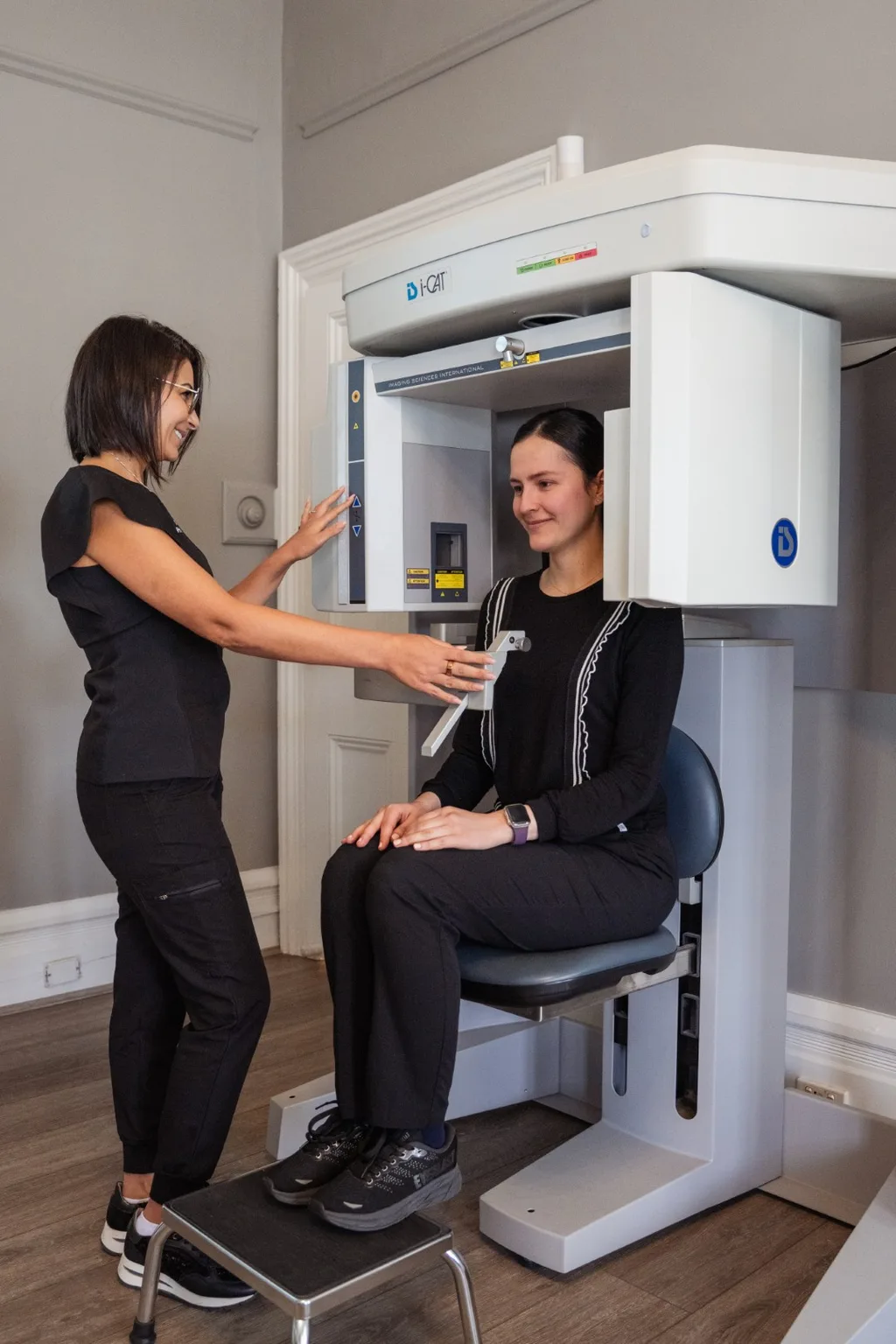
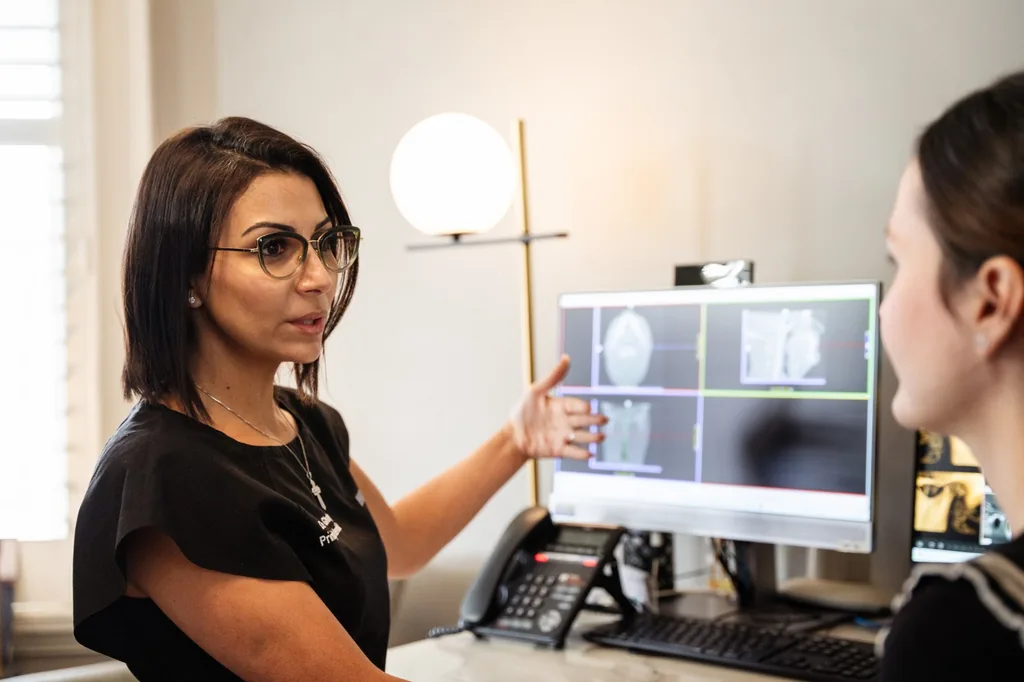
We assess referred patients using your existing study data and provide onsite CBCT imaging to review jaw joint structure and airway anatomy before proceeding with any appliance therapy. This thorough assessment ensures each patient receives the most appropriate treatment for their specific condition.
What Our Assessment Includes
The Link Between TMJ Disorders and Sleep Apnoea
Many patients are surprised to learn that TMJ dysfunction and sleep apnoea are closely connected. The position of your jaw directly affects the size and stability of your airway during sleep. When the jaw sits too far back — whether from bite misalignment, muscle dysfunction, or joint disorders — it can narrow the airway and contribute to obstructive sleep apnoea.
This connection works both ways. Sleep apnoea often causes nocturnal jaw clenching and teeth grinding (bruxism) as the body unconsciously tightens jaw muscles to keep the airway open. This creates a cycle where sleep apnoea worsens jaw pain, and jaw dysfunction worsens sleep quality.
At TMJ Therapy Centre, our unique advantage is expertise in both conditions. Our TMJ treatment addresses jaw dysfunction, while our oral appliance therapy treats the sleep apnoea — often simultaneously with a single custom device. This integrated approach frequently produces dramatic improvements in both conditions.
If you're experiencing jaw pain alongside sleep problems, or if your snoring has worsened alongside TMJ symptoms, a comprehensive assessment can identify whether both conditions are present and develop a coordinated treatment plan.
Why Choose TMJ Therapy Centre for Sleep Apnoea Treatment?
3D-Printed Precision Fit
Our MAS devices are manufactured using modern 3D printing technology for a more precise fit and greater comfort than older models — resulting in higher compliance and better treatment outcomes.
Dual TMJ & Sleep Expertise
Unlike standalone sleep clinics, we specialise in both TMJ disorders and sleep apnoea. This dual expertise means we can address jaw-related factors contributing to your sleep problems that other providers may miss.
Onsite CBCT Imaging
We provide onsite Cone Beam CT imaging to assess your airway anatomy and jaw joint health before treatment — ensuring the most accurate diagnosis and appliance design.
Collaborative Care Model
We work closely with sleep physicians, GPs, ENT specialists, and respiratory providers. If you've been referred, we coordinate with your existing care team for seamless treatment.
Non-Invasive & Simple
No wires, tubes, straps, or machine noise. Our oral appliances are simple to wear, easy to clean, and small enough to travel with — making treatment compliance effortless.
In-House Take-Home Sleep Study
Not yet diagnosed? We provide an in-house take-home sleep study — you're fitted with a simple monitoring device to wear overnight at home, and our clinicians review the results with you to confirm your diagnosis and guide the most appropriate treatment pathway.
Snoring Treatment — When Is Snoring More Than Just Noise?
Snoring is extremely common, but not all snoring is harmless. Primary snoring — without breathing interruptions — is typically a nuisance rather than a health concern. However, loud, frequent snoring is often a key indicator of obstructive sleep apnoea, particularly when accompanied by daytime tiredness, gasping during sleep, or witnessed breathing pauses.
When to seek assessment for snoring:
How we treat snoring
For patients whose snoring is caused by airway narrowing at the jaw level, a custom mandibular advancement splint can significantly reduce or eliminate snoring by holding the lower jaw forward during sleep. Many patients — and their partners — notice dramatic improvement from the first night of wear.
If your snoring may indicate sleep apnoea, we'll recommend a sleep study before treatment to ensure you receive the most appropriate care. Simple snoring without sleep apnoea can often be effectively managed with oral appliance therapy alone.
Frequently Asked Questions About Sleep Apnoea Treatment
Your Sleep Apnoea Experts in Melbourne
Sleep apnoea treatment at TMJ Therapy Centre is led by Dr Julie Ghaly, a experienced TMJ dentist with extensive training in dental sleep medicine and mandibular advancement splint therapy. Dr Julie works alongside Dr Amisha Hindocha, who holds a Diploma of Sleep Medicine from the University of Jaume, Spain, bringing advanced sleep disorder expertise to our team.
Our practitioners collaborate closely with Melbourne's sleep physicians, respiratory specialists, and GPs to ensure coordinated care for every patient. This collaborative model — combined with our unique dual expertise in TMJ and sleep disorders — means we can identify and treat jaw-related factors contributing to sleep apnoea that other providers may miss.
Ready for Better Sleep? Book Your Assessment Today
Whether you've been diagnosed with sleep apnoea, can't tolerate your CPAP machine, or want to explore treatment for persistent snoring, our team is ready to help. Book a consultation to discuss your options — no referral required. We offer same-day appointments and Saturday availability.
Sleep Apnoea Treatment Across Melbourne's South-East
TMJ Therapy Centre is located at Unit 1, 707 Malvern Road, Toorak — conveniently accessible to patients seeking sleep apnoea treatment across Melbourne's inner south-east. We regularly treat patients from Prahran, Malvern, Malvern East, South Yarra, Armadale, Caulfield, Glen Iris, Hawthorn, and surrounding suburbs.
Whether you're looking for a sleep apnoea dentist near Prahran, oral appliance therapy in Malvern, or snoring treatment in Toorak, our clinic is just minutes away with easy parking and public transport access.
Sleep Apnoea Treatment & Snoring Solutions — Melbourne, Prahran, Malvern & Toorak VIC | (03) 9804 7454